email - info@lowenergybuild.com Call: 07441 424 875 (UK) / +44 7441 424 875

Are Your U-Value Calculations Truly Reliable?
U-value calculations often promise precision but hide common pitfalls like unaged emissivity and ignored timber fractions. Learn why design-stage optimism widens the performance gap — and how to fix it.
U VALUES
4/15/20262 min read
Are Your U-Value Calculations Truly Reliable?
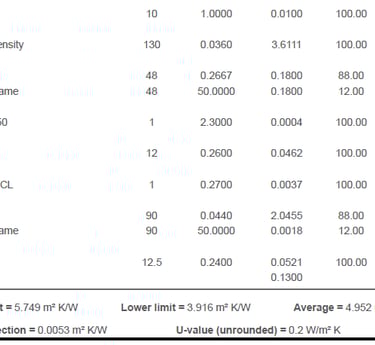
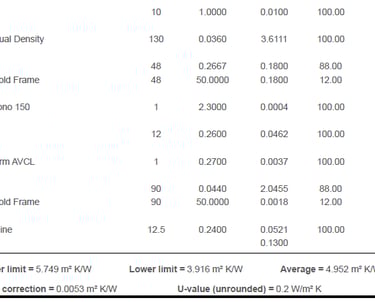
U-value calculations look precise and official, but they often leave room for tweaks that can push results in a desired direction. We've noticed more cases where professionals adjust the numbers to hit targets, even when the assumptions behind them aren't fully solid.
In our reviews, designs often show impressively low U-values at first glance, but they end up higher once we check the details. These small gaps matter, they affect building regulations, carbon goals, and how comfortable the space feels. When fed into larger energy models like SAP, the errors build up and throw off the whole picture.
Common Pitfalls to Watch For
The issues usually aren't math mistakes, but shaky starting points. Here's what keeps coming up in our project checks:
Assuming low-e coatings stay perfect
Low-emissivity layers get dulled by dust, sunlight, moisture, and handling on site. Standards like BR 443 and ISO 6946 say to use "aged" values that account for this wear, not fresh-from-the-lab figures.
Overrating air cavity performance
Air gaps inside walls typically give about 0.44 m²K/W resistance unless you have solid test data to prove more. Claiming better without proof weakens the whole calculation.
Treating outer wall cavities as sealed
External cavities have some airflow, not total stillness. NHBC guidance calls for open joints every 1.2 m or so, which cuts their insulation effect and raises the real U-value.
Skipping timber in framed walls
Wood parts in timber frames change how heat flows; BR 443 assumes at least 15% timber unless you show otherwise. Ignoring it leads to overly rosy results that don't hold up.
Pretending installation is flawless
Designs often skip real-life problems like gaps in insulation, squashed layers, or fixings that poke through. U-values need to build in some room for normal site work.
Picking the best-case conductivity numbers
Product sheets love to show top λ-values, but you should stick to certified ones from EN 10456 or the manufacturer's declaration. Cherry-picking skews heat loss for the entire building.
Why It Matters Down the Line
Bad assumptions don't stay put, they spread into things like thermal bridges (psi-values), air leaks, and overall energy use. This fuels the "performance gap," where real buildings use far more energy than predicted, from new homes to retrofits.
Site workmanship gets blamed a lot, but it starts with solid design choices. Good U-values come from real-world data and proven methods, not wishful thinking.
Making Predictions You Can Trust
Starting with clear, standards-backed inputs helps close that gap between plan and reality. A U-value isn't just for ticking boxes it's your best guess at how the building will actually perform.
As modellers, designers, and certifiers, we need to base our work on what's really built, not what we hope for. Those final decimals can make all the difference.ontent
Get in touch
07441 424 875 (UK) / +44 7441 424 875
info@lowenergybuild.com