email - info@lowenergybuild.com Call: 07441 424 875 (UK) / +44 7441 424 875

Understanding Thermal Bridging: The Impact of Linear and Point Bridges on Heat Loss and Condensation Risk
This blog explains that thermal bridging isn’t just linear (Ψ-values); point thermal bridges (χ-values) also matter. It covers their 3D heat flow, why they’re often ignored in UK/Irish compliance, and how they can still significantly affect heat loss, surface temperatures, and condensation risk.
THERMAL BRIDGING
5/26/20263 min read
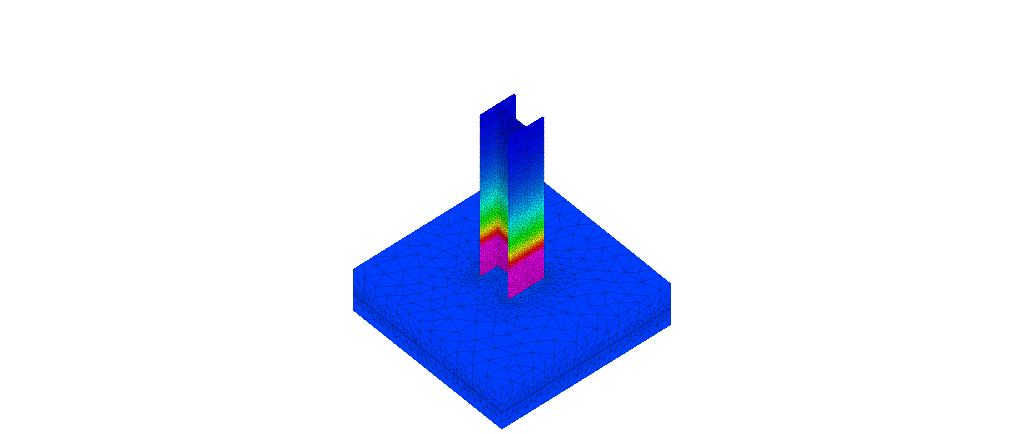
Thermal Bridges Are Not Just Linear: Why Point Thermal Bridges Matter
When thermal bridging is discussed in building design and compliance, the focus is almost always on linear thermal bridges. These are the junctions we routinely calculate, catalogue, and input into SAP, DEAP, or PHPP: wall-to-floor junctions, wall-to-roof connections, and openings around windows and doors. They are expressed as Ψ-values (psi values), in , representing the additional heat loss per metre of junction beyond what is accounted for in 1D U-value calculations.
However, this focus on linear junctions can obscure an important part of the heat loss picture; point thermal bridges.
Linear vs Point Thermal Bridges
The distinction between linear and point thermal bridges is not just semantic; it reflects fundamentally different heat flow mechanisms and modelling approaches.
A linear thermal bridge is a two dimensional problem. Heat flow occurs in a plane across a junction, and the additional heat loss is proportional to its length. This is why Ψ-values are expressed per metre. These are typically calculated using 2D finite element software and are well integrated into compliance methodologies across the UK and Ireland.
In contrast, a point thermal bridge is inherently three-dimensional. It arises at discrete penetrations or fixings where heat flows in multiple directions around a localised discontinuity in the thermal envelope. These are quantified using χ-values (chi values), expressed in , representing the total additional heat loss at that single point.
Typical examples include:
Structural penetrations such as steel beams or columns penetrating the envelope
Balcony connections
Mechanical and façade fixings, including cladding rails and bracket systems
Repetitive point fixings in external insulation systems
Why Point Thermal Bridges Are Often Overlooked
There are a few reasons why χ-values tend to receive less attention in practice.
First, compliance frameworks tend to emphasise linear junctions and there is a clear workflow for incorporating these into energy models. By comparison, point thermal bridges are rarely included explicitly unless they are particularly significant.
Second, the calculation effort is higher. While 2D simulations for Ψ-values are relatively standardised, χ-values require full 3D modelling. This introduces additional complexity in geometry, meshing, and boundary condition definition, as well as longer computation times.
Third, there is often a perception that point thermal bridges are negligible. In some cases, this is true particularly where fixings are small, thermally broken, or sparsely distributed. However, this assumption does not always hold.
When Point Thermal Bridges Become Significant
Point thermal bridges can become critical when either their individual impact is large or when they occur in high numbers.
For example, a single balcony connection without a thermal break can have a very high χ-value, depending on the geometry and materials. In a multi-storey residential building with repeating balconies, the cumulative effect can be substantial.
Similarly, facade systems with frequent metallic fixings can introduce a large number of small point bridges. Individually, each fixing may contribute only a small χ-value, but when multiplied across hundreds of instances the total additional heat loss becomes nontrivial.
This makes it clear that ignoring χ-values can lead to an underestimation of the total thermal bridging heat loss coefficient.
Impact on Surface Temperatures and Moisture Risk
Beyond energy performance, point thermal bridges can have a pronounced effect on local surface temperatures.
Because the heat flow is concentrated in a small area, point bridges can create highly localised cold spots. These are often more severe than those associated with linear junctions, particularly where highly conductive materials penetrate insulation layers.
From a hygrothermal perspective, this increases the risk of surface condensation and mould growth. The temperature factor , commonly used to assess condensation risk, can be significantly reduced at these details, even if the surrounding construction performs well.
In practice, these risks may not be captured if only 2D junctions are assessed. A design that appears compliant based on Ψ-values alone may still exhibit localised performance failures due to unaccounted point bridges.
Implications for Design and Modelling
For building designers and consultants, the key takeaway is that point thermal bridges should be considered where they are likely to be significant.
This does not necessarily mean modelling every fixing in a building. A pragmatic approach is typically required:
Identify elements with high thermal conductivity penetrating the envelope
Assess whether they are isolated or repetitive
Estimate their potential impact based on geometry and materiality
Model representative details in 3D where necessary
In some cases, manufacturers provide χ-values for proprietary systems such as thermally broken balcony connectors. Where reliable data exists, this can simplify the process considerably.
For more complex or bespoke details, 3D simulation tools are required to accurately quantify the effect.
Seeing the Full Picture
The industry’s focus on Ψ-values is understandable they are easier to calculate, widely standardised, and directly embedded in compliance methodologies. However, this focus can lead to an incomplete assessment of thermal performance.
Point thermal bridges may be less visible in compliance workflows, but they are not inherently less important. In certain scenarios, they can dominate local heat loss, drive condensation risk, and materially affect overall fabric performance.
A robust thermal bridge assessment should therefore consider both:
Linear thermal bridges (Ψ-values, 2D heat flow)
Point thermal bridges (χ-values, 3D heat flow)
Only by accounting for both can the true performance of the building envelope be understood.
Get in touch
07441 424 875 (UK) / +44 7441 424 875
info@lowenergybuild.com